Interview with Randy Susan Meyers, author of The Comfort of Lies

comfort of lies

I’m happy to announce two things: 1. This week on Traveling With T- Randy Susan Meyers stops by for an interview and author spotlight (where she reveals a special surprise for book clubs that have chosen The Comfort of Lies for their reads!) and 2. that The Comfort of Lies will be August’s Book Lovers Unite online book club selection. August’s selection will be hosted here at Traveling With T (Jen @ Book-alicious Mama had a wonderful time hosting The Painted Girls for July!) For more information on August- read here.


Interview with Randy Susan Meyers

Randy Susan Meyers- thank you for agreeing to be interviewed!

Thank you for choosing my novel for your group! It’s an honor that I truly appreciate.

What was the inspiration for The Comfort of Lies?

How do you create characters? Are the characters based on people you know?

Hope this is okay—I am answering the above questions together, as the answers are quite linked.

I didn’t give up a baby for adoption nor adopt a child, but with every pregnancy scare I had, I wondered about the choices I might make. Infidelity? I struggled with the issue in ways that allowed The Comfort of Lies to come frighteningly alive in my mind (and hopefully on paper.) I haven’t suffered through all of my characters’ crises but I’ve been close enough to imagine them all far too well.

Writing this book drew me to dark places and gloomy themes (falling hard for a man who isn’t yours; learning your husband has cheated; an unplanned pregnancy; thinking that you’re not cut out for motherhood; giving up a child for adoption; wrestling with the pull towards work and the demands of motherhood; failing at work.) Blowing up emotional truths into a “what-if” novel forced me to visit past sins of my own, sins that were visited upon me, and sins that had always terrified me as my future possibilities. People disappearing, or not being what or whom one thought—these themes are at the core of my writing and my life. The Comfort of Lies is not autobiographical—but I drew on bad times and exploded those stretches into “could be far worse” and “what if.”

I examined that thin line teetering between morality and absolution. These are themes I seem to visit in all my writing: the many ways women approach motherhood, fear of truth, forgiving others for sins and forgiving oneself for sins.

There something a little creepy about knowing that when friends, family, neighbors, and mailman read the novels I wrote, that they’re probably thinking:  So that’s what she thinks about when she has sex! Oh, that’s how she really views her kids! My God, she lies to her husband?

No matter how much I insist that no, the mean cheating husband is not really a faintly disguised version of my husband (or ex-husband), I’m quite sure that their nod of agreement translates to, Sure. I just bet.

How to explain a writer’s joyous transmogrification of demons into fiction? How to tell someone that no, that is not my mother, my sister, my husband, but a stew of the emotions and fears and love that I’ve absorbed. Philip Roth said it well in an interview (that I can’t locate) where he explained how it was the very goodness of his mother that allowed him to write about awful mothers. I understood that, because it was only after I entered a warm loving relationship that I could explore the darkest parts of myself without fear.

I’ve tried to explain my work process, in answer to those knowing glances about my characters: No. It’s not me—it’s nuggets of all my fixations blown up into a world of crazy. It is, as I read in The Nobodies Album, a novel by Carolyn Parkhurst, the butter that I can finally put in the cookies, a phrase from Parkhurst’s main character, a writer, who muses:

“There’s an analogy I came up with once for an interview who asked me how much of my material was autobiographical. I said that the life experience of a fiction writer is like butter in cookie dough: it’s a crucial part of flavor and texture—you certainly couldn’t leave it out—but if you’ve done it right, it can’t be discerned as a separate element. There shouldn’t be a place that anyone can point to and say, There—she’s talking about her miscarriage, or Look—he wrote that because his wife has an affair.”

I hope I never forget the phrase (and that I always give proper thanks to Parkhurst) about “the butter in cookie dough”. What a perfect capture for fiction—taking the elemental issues with which one struggles, giving those problems to one’s characters, and kneading those thorny emotional themes that haunt into the thoughts, minds, and actions of those characters until, hopefully, you can beat that sucker into submission.

Then move on to the next one.

How do you explain to a neighbor that your lifelong struggle with a mother obsessed with vanity became a character’s need to re-invent herself as a cosmetic tycoon? That your daily struggle with weight grew into a character’s morbid obesity? That your lonesome childhood morphed into a Dickensian orphanage?

How do you answer the questions, “Where did you get that idea?” There’s not a book club I’ve visited that hasn’t asked me that question about my book, and while the answers I give are honest: a childhood incident, the work I’ve done, a letter to the editor I read—those are the answers about the book’s recipe.

Now, thanks to Pankhurst, I have the answer to how the emotions marbling the story really came about:

It’s the butter in the cookies.


In Comfort of Lies, there are several characters- did you have a favorite?

If there’s any character I can call a favorite, it would be the most silent: Savannah. The little girl captured me from the first time I wrote her name/s. (The fact that there were two names represented, for me, the pull on this child.)

The book has nothing written from her point of view—but my original manuscript ended with an epilogue from Savannah, a scene that takes place seven years after the end of the book, when Savannah is 13. I might have written that scene just for me, as I had to know what happened to her (and the rest of the characters.)

After much back and forth, my editor and I decided not to end with that epilogue, but now, so many readers have asked what happens to Savannah, that after the paperback comes out (Feb 2014) I am going to send a PDF of that scene to all book clubs who’ve chosen The Comfort of Lies for their group. (This is the first time I’ve written about this plan, Tamara! I’m breaking this news here.)

As for the main characters—(in order of appearance!) Tia, Nathan, Juliette, and Caroline—it was never a matter of favorites, but of challenges. Each character forced me to access a different side of my self and of other people I know, of beliefs, of experiences. I found that fascinating. I write each character from a very close point of view, entering their world in totality. We are all the stars of our own show. The same is true of characters. They believe the reality they tell themselves, so each character must be written with a sense of empathy for self, the same as we hold for ourselves.

The only time I consciously base a character on someone I know is in the case of minor or walk-on characters. These are characters that are allowed to be more ‘one-note’ so I can have some fun by pulling up memories and either honoring (or not) people from my past.

When writing Comfort of Lies- did you know how it would end? Or did the ending reveal itself as you were writing?

I outline about ¾ a book before I write. This gives me enough of a road map to know where I am going. Then, as I write, I am drawn to what will become the inevitable (to me) conclusion. This outline gives me the structure that I need, without losing the momentum I want for passion and discovery.

As I wrote The Comfort of Lies I had that anxiety of “what are they going to do!” that keeps me on edge, keeps me taking long walks to figure out what everyone will do. I search for the most logical and honest-to-the-characters ending, while keeping in mind a satisfying arc for the reader (and for me!)

Randy, I remember reading an article that you had written about being a writer of a certain age. Do you think being older helps in your writing? Are you more focused now than possibly at an earlier time?

Yes, yes, and yes! I always loved writing (and in fact co-authored a nonfiction book in my twenties) but due to circumstances (single-parenting, working two jobs) it took many years before I could concentrate on my true love (besides my children and 2nd husband) of fiction.

One of the main advantages in waiting to write is this: I believe using emotional experience from the past gives me greater control in my work than I had when I was writing from fresh wounds. When I look back at some of my earlier work (unpublished!) I see that I was far less able to be honest. I was not able to write without “the reader over my shoulder.” It is obvious to me (with much wincing) how much I was writing to either heal my own past or justify decisions I’d made. Now I don’t feel that constraint.

And, very important, now I can have a calm life while infusing my work with every bit of drama I can squeeze in, living by these words from Gustave Flaubert:

Be regular and orderly in your life, so that you may be violent and original in your work.”

How long did Comfort of Lies take to write?

Drafting and editing the novel took about eighteen months. Then there is an entirely new set of edits and revising that one does with their editor, so from conception to publication was about three years.

If Comfort of Lies was made into a movie- Randy , do you have a dream cast in mind?

These were the actor-images I imagined as I wrote—vague dreamy versions of them. Caroline was a combination of a young Meryl Streep and Laura Dern. Tia held a sense of Natalie Portman’s coloring and fragility (along with Keira Knightly.)  Nathan held a hint of a young Andy Garcia combined with Craig Bierko. And Juliette, although the coloring is wrong, I had a feel of Julianna Margulies.

How would you describe Comfort of Lies?

The short version is:

The Comfort of Lies, a novel about the collateral damage of infidelity, reveals the darkest and most private thoughts of three women. A little girl’s birthday triggers a collision course for three women—the woman who gave birth to her, the woman whose husband fathered her, and the woman who adopted her—forcing them to face the damages of infidelity and make decisions about marriage, motherhood, and their careers. The Comfort of Lies, a novel about the collateral damage of infidelity, reveals the darkest and most private thoughts of three women.

The longer version would include:

Three Mothers. Two Fathers. One Child.

Five years ago Tia fell into obsessive love with a man she could never have. Married, and the father of two boys, Nathan was unavailable in every way. When she became pregnant, he disappeared, and she gave up her baby for adoption. Now, she’s trying to connect with her lost daughter and former lover.

Five years ago, Caroline, a dedicated pathologist, reluctantly adopted a baby to please her husband. She prayed her misgivings would disappear; instead, she’s questioning whether she’s cut out for the role of wife and mother.

Five years ago, Juliette considered her life ideal: she had a loving family, a solid marriage, and a thriving business. Then she discovered Nathan’s affair. He’d promised he’d never stray again and she trusted him. But that was before she knew about the baby.

Now, when Juliette intercepts a letter containing photos meant for Nathan, her world crumbles again. How could Nathan deny his daughter? And if he’s kept this a secret from her, what else is he hiding? Desperate for the truth, Juliette goes in search of the little girl. Her quest leads to Caroline and Tia and before long, the women are on a collision course with consequences that none of them could have predicted.

Any ideas as to what the next book will be about, Randy Susan Meyers?

In my next novel (which has a current release date of September 2014, from Atria Books/Simon & Schuster) social worker Maddy Illica shields herself with pills and work as she protects herself and her children from husband Ben ‘s temper. Public defender Ben dreams of being a hero while his family crumbles under his periodic rages, until his recklessness precipitates a tragedy. Maddy can no longer protect anyone and nothing is certain. The story is told from the point of view of Maddy, Ben, and their 14-year-old daughter.


*Special thanks to Randy Susan Meyers for agreeing to be interviewed!


randy susan meyersRandy Susan Meyers, author of The Comfort of Lies, is working on her 3rd novel. For more information on Randy, visit her website, Facebook, Twitter, HuffPost, Pinterest, and Goodreads pages.


Interview with Amy Shearn- author of The Mermaid of Brooklyn

the mermaid of brooklynA few months ago, I was sent a copy of The Mermaid of Brooklyn– and I’ll be honest- I did not know who Amy Shearn was. The cover drew me in- but the writing made me stay. It’s funny- with a biting wit that is similar to The Nanny Diaries (in my opinion). After reading it, I had 2 regrets: 1. that I had finished and 2. that Amy is a New Yorker and I’ll probably never get to meet her to tell her in person that I enjoyed The Mermaid of Brooklyn.

Amy was kind enough to agree to an interview- today, we’ll talk about The Mermaid of Brooklyn, Jenny Lipkin, and much more! She’ll be back Wednesday to talk #literarycrush, #literaryconfessions, and guilty pleasures.


Interview with Amy Shearn

Amy, how did the idea of The Mermaid of Brooklyn happen?

I was shopping with my grandmother for shoes to wear at my wedding when she told me the story of how a pair of shoes saved my great-grandmother’s life. My great-grandmother, a tiny, tough woman named Jenny Lipkin, was a virtuosic seamstress, a self-sufficient ball-buster, a strong mother of three girls, and the wife of a really awful man – and yet the tale my grandmother told spoke of such inner turmoil, vulnerability, even a touch of the poetic. This story stuck with me, and somehow combined in my mind with the idea of the rusalka, the malevolent mermaid of Eastern European lore. I was trying to write an essay interweaving the two ideas for the longest time, until one day when I was describing it to a friend in the hopes she could help me untangle it all, and she said, “Um, that’s a novel.” The final piece fell into place when I became a mother. I found myself fascinated by the parenting culture of Park Slope, Brooklyn – half-loving it, half-amused/repelled by it – and that was when I was ready to start writing the book.

Is Jenny Lipkin based on you, Amy? Or any mothers you know? Or is more of a collective idea of mothers everywhere?

I think every character in a novel is a little part of the writer. From the outside, Jenny’s life certainly looks like mine. I live in Brooklyn, I have two kids (although when I was writing the book I only had one), and when I was writing the first draft of this book we lived in a cramped walk-up apartment that was making me crazy. Like Jenny (and like many writers and bookish types, I think) I often find myself feeling like a bit of an outsider, observing everyone else, looking in.

That said, I based her character largely on the original Jenny Lipkin. I knew so many mothers who battled with post-partum depression or depression in general that I felt it was important to speak to that, too, although I was lucky to not have experienced anything so dark and awful after the birth of my babies. And my husband doesn’t disappear on gambling binges! Phew.


How long did it take to write The Mermaid of Brooklyn?

The first draft took about two years, fitting neatly in between the birth of my first child and the birth of my second. Then my agent had some revision ideas, so I spent a few months working through those, and then of course my editor had more notes, and the whole process of her reads, the copyediting, the proofreading, and all that other publishing side business that took another year or so.


The witty lines- I’ve read other reviews that compare the biting wit of A Mermaid in Brooklyn to The Nanny Diaries. Do you have any thoughts on that comparison?

Oh, that’s so nice! I have no idea since I haven’t read The Nanny Diaries, but I’ll take it as a compliment.


Do you think The Mermaid of Brooklyn would make a good movie? Have you ever wondered who could make up the dream cast? I’ll be honest- I’m very interested in knowing who would be the rusalka.

I would love to see TMOB as a movie! While I was writing it I happened to see the film All The Real Girls and thought that then-Zooey Deschanel and then-Paul Schneider would be great as Jenny Lipkin and Cute Dad, mostly because they had this great chemistry, and because I have a weird embarrassing movie-star crush on Paul Schneider. I don’t know – Jenny would be hard to cast, particularly since one of her defining characteristics is being tiny, with size 4 feet (it’s a pretty important plot point!). A lady who works at Powerhouse on 8th, this great bookstore where I had my book launch, told me she pictured the rusalka as Bette Midler, which I think is pretty perfect.

In The Mermaid of Brooklyn, you do not sugar-coat the life of a mother with 2 young children. I find that refreshing.  Have you encountered readers who think otherwise?

Oh gosh yes. A few reviewers seem to find Jenny to be quite awful, as if having negative thoughts about the constant, brutal, unappreciated work of parenting meant you didn’t love your kids or weren’t a good mom. A mother-writer I know scoffed at this, and told me over Chinese food the other day, “Any mother who says she hasn’t had thoughts like Jenny’s is LYING!” I think some readers find Jenny to be whiny and self-pitying, too. She is, of course, and that’s part of why she needs so much help from Bette Midler. I mean the rusalka.

It’s hard to be honest about how hard parenting is, because of the fear of being judged – but I’ve found some of the most satisfying experiences to come out of writing this book are all the mothers who say to me, “How did you know? It’s like you’re inside my head! I’m not alone!” We have to be honest with each other. It makes us all feel a bit less mad.

Have we heard the last from Jenny Lipkin? Is her story over? Or might you revisit her one day?

I can’t imagine writing anything else about this character. I love her, but it was hard to spend so much time with her voice in my head. I actually wrote a note to myself while slogging through a millionth round of revisions – I may have even tweeted it! – to remember that writing about a depressed person can be very depressing. It’s like hanging out with that downer friend…for years.

What are you working on next, Amy? Are you still gathering ideas or do you have a book in mind?

I’ve been thinking about, researching, and outlining a new novel for some time now, but only in the past few months have I started writing it. Now that I’m really writing it I feel like I can’t talk about it or I will jinx it somehow. But I’m excited. It feels good to be actually writing again.


*Special thanks goes to Amy Shearn for agreeing to be interviewed!


amy shearn 1Amy Shearn, author of The Mermaid of Brooklyn, can be found on Facebook, Twitter, and she has a website as well. Recently, Amy had an article in the New York Times Opinionator section, A Writer’s Mommy Guilt.


To read Traveling With T’s review of The Mermaid of Brooklyn, visit HERE.

Interview with Mia March, author of Finding Colin Firth


finding coling firrth1Mia March, author Finding Colin Firth, stopped by Traveling With T to discuss Finding Colin Firth, who she’d cast into a movie version, and if she is going on a book tour!

I’m also lucky enough to have a giveaway of this book- a SIGNED copy! Hold on to your hats, ladies!

Check back on Wednesday for Author Spotlight on Mia March- we’ll learn her #literarycrush and #literaryconfessions!


Interview with Mia March

Mia, thank you so much for agreeing to be interviewed.


A: Thank you for having me!


What was the inspiration for Finding Colin Firth?

A: Well, I’d say it started back in 1995, when I sat down to watch the BBC TV miniseries of Pride and Prejudice. When Colin Firth, as Mr. Darcy, first appeared on the screen, I thought to myself: Who IS that? I swooned for the six hours of the miniseries and he’s been my favorite actor ever since. But the inspiration came from A) having just watched The King’s Speech and B) my wandering around of my favorite towns here in Maine, Boothbay Harbor, picture-postcard summer tourist town, and wondering what it would be like if Colin Firth came to film a movie there. Suddenly I had three main characters all with very different reasons to want to find Colin Firth.

Mia, out of all the actors you could have chosen to feature in this book- what made you pick Colin Firth?  (Not that I’m complaining or anything- he plays quite the adorable man in Love Actually!)

A: To be honest, I didn’t pick him; the book chose him. He’s my favorite actor and has been for such a long time. He has a unique hold on women, I think. Yeah, George Clooney is gorgeous, and Ryan Gosling is hot, but Colin Firth has something special; women, especially myself, respond to his perceived integrity, despite having never met him! And yeah, he’s so good looking!

How long did it take to write Finding Colin Firth?

A: I thought about the characters for a few months before I started writing, as I always do. Once I started writing, I had a first draft in about five months. The revision took another few months. I do a lot of writing in my head!

How involved were you in the choosing of the cover for The Meryl Streep Movie Club and Finding Colin Firth? I’m a huge fan of book covers- and I adore both of them. Interesting and eye-catching.

A: Oh, thank you! I was involved in that my editor asked for my ideas. For Meryl, we all liked the concept of Maine and readers being invited into a living room. I love that popcorn bowl! For Colin, my brilliant agent came up with the idea. A man’s suit as the cover—with the idea that it’s Colin Firth himself. The minute she suggested it, I knew it was the cover, and everyone said yes!

Do you have a writing space? Or a writing routine?

A: I write when my soon to be 11 yr old son is either at school or camp. My routine doesn’t vary too much, mostly because I love my desk: a six foot tall mahogany secretary. It’s narrow without much room other than for my laptop and my chamomile tea and the little things that inspire me, like photos of my son and dog and a stack of inspiring books. So I write at home generally during the hours when my son is away. I’m a morning person, so up at dawn to walk the pooch, where I work out plot problems and think of ideas. Then I write until my son wakes up. Once he’s off on his day, I sit down and write for hours.

The Meryl Streep Movie Club was picked as a She Reads Book of the Month choice.  How, in your opinion, was that experience for a first time author?

A: It was magical! It brought the book to the attention of so many readers, and it was wonderful to have so many book bloggers readers the novel and writing about it. The whole experience was amazing. It was quite an honor that She Reads chose my novel! I love that site.

The Meryl Streep Movie Club and Finding Colin Firth sound like perfect summer movies. If either was made into a movie- do you have a dream cast in mind?

A: I do—and it’s amazing how quickly these actors came to mind out of so many. For my three main characters: Bea—Anna Sophia Robb. For Veronica—Jessica Chastain or Cate Blanchett. For Gemma: Isla Fisher. And Colin Firth will play himself in a cameo!

How did you create the characters in Finding Colin Firth? Do you have a favorite character?

I’ll admit that my favorite character, the one who came alive for me in a really deep-down way, was Veronica, the 38 year old diner waitress who bakes special elixir pies and is grappling with her painful past. It was Bea, the 22 year old who came first though: I started thinking about what it would be like to discover as an adult that you were adopted at birth when you never knew. And the characters stemmed from that concept. Before all of that, I had a small Maine town and the idea of Colin Firth coming to film a movie and how that would affect people. And everything just tied together and I started writing.

Will you be going on a book signing tour with Finding Colin Firth?

A: I’m doing a virtual tour and a few local-ish readings, staying close to him. I recently adopted a shelter dog (the cutest little beagle mix) and want to make sure she feels settled before I take off for extended time).

Mia- what are you working on next? Can you reveal any hints about your next book?

A: I’ve just started thinking about my next novel . . . all I can say at this early point is that it involves food!


*Special thanks to Mia March for agreeing to be interviewed!


mia marchMia March, author of Finding Colin Firth, can be found on Twitter, Goodreads, Facebook and her website. Mia is not only a reader- she’s also a huge movie fan (and she does watch movies other than the ones Colin Firth has a role in- although she does like those quite a bit!)


*Giveaway: To win a copy of Finding Colin Firth, tell me you favorite Colin Firth movie! Please include your email (you may use the AT and DOT). Giveaway will begin July 22nd and end July 29th at 11:59pmEST. Winner will be announced July 30th. Giveaway is open to US only (sorry!)


Interview with Claire Cook, author of Time Flies

time fliesClaire Cook has just had her 10th book published! She stopped by to talk about Time Flies (which is on Deep South Magazine’s Summer Reading List 2013) and many, many other things!

Claire will be back on Friday- to reveal her #literaryconfessions, #literarycrush and some of her favorite authors!

My review of Time Flies will be posted on Thursday- so stay tuned for that as well!

Interview with Claire Cook

Claire, thank you so much for agreeing to be interviewed!

Thanks so much for interviewing me, Tamara!

Time Flies is your 10th novel. How has the writing process changed from your first novel to the 10th? Has the writing process gotten any easier?

Wouldn’t you think by the tenth novel it would get easier? Sadly, it’s not, except for the fact that since I survived the first nine, I knew I was probably going to live through the tenth one, too! Writing a novel is a leap of faith, and it’s still a mystery to me how it all comes together. I think my inner reader saves me every time. I don’t think you can be a writer unless you’re an avid, joyful reader, and I believe that as you read and read, a template forms somewhere in your brain that somehow helps you write your own books.

Must Love Dogs was made into a movie. After writing the book, and then having the movie made- would you like any more of your books to be made into a movie?

Of course! I’d like all of them to be made into movies – it was a totally awesome experience! And every time the Must Love Dogs movie plays on TV, which is a lot, new readers discover my novels, which is the biggest gift of all. I’ve had other books optioned for film since, but it’s rare that they make it through all the Hollywood hoops and onto the big screen. My fingers are crossed that lightning will strike twice though!

Time Flies has earned spots on several summer reading lists. One of the lists is Deep South Magazine’s Summer Reading List. How did it feel seeing Time Flies on a list with Looking for Me by Beth Hoffman, The Time Between by Karen White and Ladies’ Night by Mary Kay Andrews?

It was such thrill to make Deep South Magazine’s Summer Reading list! As a recently transplanted Northerner, I’ve been shouting it out at all my book events and saying, “Wow, they let me in – I finally feel like a Southerner!” Beth and Karen and Mary Kay are all writer pals, so I’m as happy for them as I am for me, and truly honored to be included on the list with so many talented authors.

How long did Time Flies take to write?

When I’m writing a first draft, I write two pages a day, seven days a week. So, essentially, I’m living in the book, thinking about it all day long. I’ve noticed my best ideas come in the shower, on the elliptical machine at the gym, at red lights when I’m driving, and when I wake up in the middle of the night. I jot things down all day long – on notecards, in notebooks, on the backs of receipts.

I don’t outline, because it would make it feel like a term paper. I try not to think too much or try too hard, because when I do, my writing goes flat. I have a sense of who my main character is, and because my books are written in the first person, my entry point tends to be capturing my protagonist’s voice. Then, because I’m essentially writing slice-of-life novels, I think about what makes the book begin today instead of another day. Once I find that little explosion, then I have my jumping off point. The characters react to that and there’s a ripple effect. I just keep following those ripples and in about six months or so, I have a first draft. And then the real work begins since the truth is it’s the rewriting – again and again – that makes your novel truly come alive. I delivered my first draft of Time Flies just before Wallflower in Bloom came out last June, so the whole process takes me about a year – and lots of hard work!

Do you have a favorite character in Time Flies?

I have to be able to love all my characters, even the unlovable ones, or I wouldn’t be able to write them convincingly. And I never pick favorites – I wouldn’t want to hurt the other characters’ feelings!

Claire, you are very active on social media and often ask your fans questions as you are writing your books. How much does talking to fans help in your writing?

I think social media is a great way to help new readers find my books, and I’m lucky that I really enjoy it. The challenge is not getting so sucked in that it encroaches on my writing time.

I love asking my readers questions to help me with my books, and I know they enjoy being a part of the process. While writing Time Flies, I asked everybody to share their favorite songs from high school, as well as old clothing and makeup memories. It was fun for all of us and also gave me some great authentic details for the novel.

I also love hearing what resonates for readers in my books, and I think it’s helped me become a better writer. So if you’re reading this right now, I hope you’ll connect with me on Facebook and Twitter and Pinterest and Goodreads and at ClaireCook.com, where you can sign up for my e-newsletter, Must Love Readers.

The cover of Time Flies is beautiful. It makes me think of carefree days and leaving worries behind. How do you decide on a cover?

Thank you! I think I’ve been really lucky in getting great covers, though I can’t take any credit for it. They’ve all been designed by talented cover designers hired by my publishers. If I don’t think early cover concepts would resonate for my readers, I speak up, but other than that I stay out of it and leave it to the professionals!

Claire- what are some words you would use to describe Time Flies?

I hope it’s fun and funny and poignant and real and ultimately uplifting.

Are you working on a new novel? Taking a well-deserved break before you write again?

Ha! A break – what’s that?!? I delivered a draft of my next novel to my literary agent the week before Time Flies came out, and I’ll jump into my first set of revisions moments after I finish this interview. Stay tuned…it’ll be out sometime next year!

*Special thanks to Claire Cook for agreeing to be interviewed!

claire cookClaire Cook has just published her 10th novel, Time Flies. She’s having too much writing to take a break! When Claire is not hard at work on her next book (and even when she is!) she can be found on social media sites interacting with fans. To find out more about Claire, visit her website, Facebook and Twitter.

Interview with Wendy Francis- author of Three Good Things

three good thingsToday, Wendy Francis- author of Three Good Things– was gracious enough to find time to answer some interview questions about Three Good Things, why she’s writing now instead of being an editor, and why a kringle should be something we all can experience. Check back on Wednesday, when she’s back for an Author Spotlight- complete with #literarycrush and #literaryconfessions.

Interview with Wendy Francis

Wendy, what was the inspiration for writing Three Good Things?

After being a book editor for several years, I very much wanted to try my hand at writing. When I was home alone with my one-year-old son, I figured it was as good a time as any to give it a go. At the back of my mind was a story about two sisters whose mother died when they were young. Ellen was the first character I imagined for Three Good Things. I knew she was at a turning point in her life, recently divorced, in her forties, and about to open a bakery. I was also missing the Midwest, where I grew up, and wanted to recapture its spirit – and its signature pasty, the kringle – in my novel.

How long did Three Good Things take to write?

I wrote the first draft probably in a year, but then I did a fair amount of revising over the next year. From start to publication, it was about three years.

Are any of the characters in Three Good Things based on people you know in real life? Or are they created from your imagination?

I don’t have a sister, but I’m very close to my mom. In many ways, she was the inspiration for the bond between Ellen and Lanie. And though Ellen is much more outspoken than I am, I share her affinity for proper grammar, the Midwest, and, of course, kringle.  Lanie ended up being the easier character to write, if only because I’d just had a baby myself, so all those great baby firsts (and sleepless nights!) were still vivid in my mind.

Your character, Ellen, opens a shop called the Singular Kringle. Why not a cupcake or cookie store? What, in your opinion, made a Kringle the food to feature at Ellen’s store?

This one is easy to answer! I grew up in Wisconsin, where kringle is a staple for breakfast, tea, you name it. It’s a delicate Danish pastry that has nearly thirty layers of butter and a filling – apple, almond, or blueberry, to name a few. I probably don’t need to say anything more than “thirty layers of butter,” but authentic kringle is mouth-watering. Racine, Wisconsin, is the American home of kringle. In fact, I recently learned that State Representative Cory Mason has proposed that it be named the official “state pastry.” That’s how seriously we Midwesterners take our kringle! Since the book is set in Wisconsin and my own personal dream is to open a kringle shop one day, it seemed natural that it would be Ellen’s dream as well.

If Three Good Things was made into a movie, do you have a dream cast?

Wouldn’t that be fun?! Let’s see. . . I love Rachel McAdams (she played Allie in The Notebook) for Lanie. Ellen would have to be played by someone with humor and sass: maybe Sandra Bullock? As for the fellows, Max has to be sexy and sultry: Eric Dane from Grey’s Anatomy? For Henry, how about Greg Kinnear (he seems as if he has a gardener’s soul)? And Lanie’s husband, Rob, would be well-played by any of those cute, earnest-looking young actors – Jake Gyllenhaal and John Krasinski are a couple who come to mind!

Wendy, you were a former senior editor in publishing. Now you are an author. How are the lives different? How are they similar?

Good question. I wrote a little piece about this called “A Letter to the Author You’re About to Become” on the Huffington Post (http://huff.to/10ZEATC). In a nutshell, it’s a lot harder being an author than an editor! You’re much more isolated, and there are long stretches of time when you wonder if what you’re writing is any good. Self-doubt seems to be an essential part of the writer’s life. On the other hand, so is that wonderful feeling that you’ve created a whole new world on the page.

“At the end of every day, you can always think of three good things that happened” is a phrase that is said in Three Good Things –it’s the advice that Lanie and Ellen’s mother gave them. Is this advice that you pass on to your family and friends?

Though I don’t think anyone in my family would accuse me of being a Pollyanna, I am a big believer in taking time to stop and appreciate the little things in life.  Maybe it’s the Midwestern girl in me talking, but I love a good, drenching rainfall, a rosebush in full bloom, an amazing view, a good laugh. I’ve since come to learn that a lot of people try to recall three good things at the end of every day.  I think it helps a person keep perspective, even when the world appears to be breaking your heart.

What are you working on next, Wendy? Can you give us any hints?

I’m writing my second novel, which features three women who are all facing various challenges in their lives. I wanted to write a story that captures the kaleidoscope of experiences that many friends seem to be confronting right now – balancing work and marriage with caring for their children, their own aging parents, and their own health.  But it’s also a summer novel, set on the East Coast, so you can count on some romance and a few salty characters as well.

*Special thanks to Wendy Francis for agreeing to be interviewed!

wendy francisWendy Francis, author of Three Good Things, a former senior editor and currently hard at work for her 2nd book. Look for Three Good Things in stores or online. Like Wendy’s writing? You can find funny and poignant posts of hers at Huffington Post. Wendy also has a website and Twitter page.

To read Traveling With T’s review of Three Good Things, read HERE.

*GIVEAWAY: A copy of Three Good Things is up for grabs! Comment on this post and tell me what’s the best mother-ly advice you have ever received! Giveaway is open to US only (sorry!) and will run from July 15th- July 22 at 11:59pmEST. Winner will be notified on July 23rd. Please include your email address (you may use the AT and DOT).  While no extra entries will be awarded for following Traveling With T or liking my Facebook page- if you’ve been enjoying the content lately- give me a like or a follow!

David Niall Wilson- Author and creator of Crossroad Press

A few weeks ago, I began chatting with David Niall Wilson. We began chatting about books, Crossroad Press and more. While David writes in a different genre than I normally read- listening to him talk about books was interesting. I approached him about an interview- and here it is!


Interview with David Niall Wilson

David, can you tell us a bit about Crossroad Press?

Crossroad Press was formed in 2009 as Macabre Ink Digital.  The original intent was simply to bring my own out of print books to digital, and to try and get a few of them done as audiobooks.  My background, besides being an author, is in IT.  I’m IT Manager for a very successful company, and have extensive background in web development, networking, and computers.  All of this made learning the basic tools of the trade a short and simple task.

When I started getting my titles out there, a few friends noticed what I was doing.  Digital had just begun to take off.  Everyone was afraid of being left behind.  Some publishers were moving into eBooks, but seemed bent on making as much money as they could while, as usual, excluding the authors.  Those friends asked if I’d help them with their books.  They offered to pay me.  I declined.  Instead, I asked for a small percentage.

That is the backbone of Crossroad Press.  We are now a growing, widely distributed digital publishing company.  Our books are on Amazon, Barnes & Noble, Sony, Apple, Diesel, Kobo, and Smashwords.  We are also distributed to libraries through EBSCO (once Net Library) and Overdrive.com, as well as through direct sales to several library consortiums.  We are on the verge of a major deal with libraries in North Carolina.  We have published over 650 titles, and expect growth to continue exponentially.  We are approached by new agents, publishers, and authors almost daily.

The beginning was simple.  We set out to find out of print books that had been forgotten, the horror and sci-fi and mystery books we enjoyed that could not be easily found, and that had missed the switch to digital completely.  We found a lot of authors with boxes of books in their garage that no one was ever going to read.  I developed a quick and simple way of scanning these, and between myself and my associate editor and partner, David Dodd, a database and programming whiz, we figured out how to reconstruct those OCR scans into word documents.  We have a small army of folks working for us proofing and copy-editing, mostly for the love of books, or for free reading of the rest of our library.

We keep our bottom line as low as possible.  Most cover art is handled in house.  We are committed to never changing the original model.  Eighty percent of all net sales of eBooks go to the author.  A clean copy of any scanned book goes to the author.  We handle everything, and the author gets 80 percent, mostly on works that are just not available.  If you are an author with a back-list, and your agent, or friends, or anyone, really, is urging you to publish digitally through someone who charges fees for the “service” of publishing you – you should contact us before you make any decisions.

We keep the prices of the eBooks reasonable.  Most old, novel length paperbacks can be had in print from Amazon for .99 plus shipping.  We sell most reprint genre books for $2.99 – $3.99 to hit the minimum price Amazon will pay out 70 percent on.  Scarcer or larger books we scale upward.  The most expensive eBook we’ve sold is $6.99.  I remember when I used to read incessantly, and I remember that around $5 a book is where it was no longer an impulse buy for me, and I had to think a lot harder before buying something new.

Along the way we’ve picked up authors like Clive Barker, Jay Bonansinga, P. F. Kluge, James Dalessandro, Jo Landsdale, Jack Ketchum, Chet Williamson, the estates of Hugh B. Cave and Irving Wallace, International best-selling authors Thomas Sullivan and William Bayer, most of the estate of Charlie Grant, works by John Farris and Neil Barrett Jr., and even the eBook s for the Stargate Series.  We have developed some original series works, and are pursuing those aggressively with some good results.

I noticed in the store that there are some books by you, David. Are you continuing to write?

I’m a writer first.  As I mentioned in my first answer, Crossroad Press only started as a way to get my own backlist into digital.  I’ve written more than thirty books, had over 200 short stories published, won some awards, and write constantly.  My most recent novel, just out, is Nevermore – A Novel of Love, Loss & Edgar Allan Poe.  It’s well-reviewed so far and I have high hopes for it.

Today, people talk about e-books vs paper books. Do you have a preferred format? Does one format have more benefits for the reader?

I find the whole argument silly. We had stories that people told one another, way back before books.  Then we started writing them down, but they were expensive and few owned them.  Then books became cheaper, and easier, and before you knew it, everyone could own and read books.  Books (printed books) have been with us for a very long time, and I don’t think they are going anywhere anytime soon.  eBooks, audiobooks, all of these are just new formats – stories, are stories.  Everyone has their own preference – I like to own, and hold real books, but I read more often on my Nook or my Kindle because I am a digital publisher, and carrying around fifty books is not practical.  I love to read, and for me it’s about stories, and words.  The format should not be the reason someone does, or does not buy a book.

Traditional publishing vs self-publishing- what are your thoughts? Is either way better? Or does it not matter?

Again, I don’t really fall on either side.  I’m a hybrid.  I published for many years through the traditional system, and when I started my own company, I began publishing on my own.  Crossroad Press is a publisher – though – not exactly a NYC style publisher, more of a hybrid.  We have nearly 150 authors and 700 titles…not tiny any longer.

Publishing (again) should not be the focus. What is most important is a good story.  It is also important that the story be well-written, edited, proofread, and presented in a pleasing manner.  If you take that as a given, the only advantage NYC has over other forms of publishing is their huge budget and a bunch of pretentious people trying to protect their jobs by pretending they know things others don’t.

Authors are using social media to help promote books. Is this a good thing? Is it a necessary evil?

A lot of people are out there telling authors that they have to promote through social media.  After four years of digital publishing, this is what I know.  If you have a social media following made up of family, friends, and other writers, you are mostly wasting your time and bothering your friends.  Social Media marketing works just like any other marketing.  To be successful it has to reach out to people you do not know and who are interested in buying books.  That is harder.

A lot of “services” have sprung up, asking authors to plunk down money to be marketed.  We have tested a lot of them, others we avoid like the plague.  The key to whether or not you should use a particular kind of social marketing is results.  If you can’t find someone who can say “I did this, and I sold this, and this is how,” it’s probably a better idea to spend your time writing.  I’m not saying not to talk about your books – it’s part of what authors do – I’m just saying spend your time – and money – wisely when you schedule marketing for your book.


*Special thanks to David Niall Wilson for this interview


For more information on David Niall Wilson, check out Goodreads, Facebook, Twitter or his website.


Interview with Colette Freedman, author of The Affair

the affairColette Freedman, on Monday, revealed her #literarycrush and more. Today, she talks about The Affair, her next book and more!


Interview with Colette Freedman

Colette- what was the inspiration for The Affair?

I like telling stories about extraordinary events happening to ordinary people and affairs are extraordinary events happening to ordinary people.   There are extraordinary consequences to the participants of an affair when it is discovered; yet, the actual events of an affair are completely ordinary.  We all know people who have been involved in affairs or have survived an affair.  And an affair is about people – and people fascinate me.

How long did The Affair  take to write?

I did a lot of research first, but the actual writing took about one year.

Are any of the characters in The Affair based on people you know in real life? Or are they created from your imagination?

I think ever writer creates characters based off people they know, but in this book, I was very careful not to include anyone I knew.  Everyone in The Affair comes from my imagination.  However, I should add that my mother is fairly convinced that she is personified in many of my characters.  She is only half right!

If The Affair  was made into a movie- do you have a dream cast?

My dream cast changes weekly. I just saw the play version of the novel done in Italy and it made me rethink my casting options … although it’s pretty hard to go wrong with Colin Firth as Robert.

Colette, The Affair is a type of book that could be, in the wrong hands, boring. I’ll freely admit that at first I was worried about reading a he said/she said book. However, with the way you wrote about the wife, husband and the mistress- it made the topic understandable, interesting.  How hard was it to get the voice right for the characters in The Affair?

I think it’s important to tell stories from different character’s perspectives. Agreed, there are a lot of he said/she said stories. But the rarer story is the he said/she said/she said. I’ve met a lot of people involved in affairs and have listened to their differing perspectives of the same events. No one sees the same events in the same way.  We are all unreliable witnesses.  Once I had Kathy, the wife’s voice clear in my head, then Robert’s voice was fairly straightforward.  Stephanie, the mistress, was the most challenging because, in many ways she is Kathy.  The statistics show that men often have affairs with women who look like their wives (or their mothers!)


After writing The Affair and hearing people’s reactions to the book- is there anything you wished you had changed?

No, this is one of the few books I am really happy with and it came out more or less as I imagined it.  There are bits of rough writing I’d like to polish, but that’s true of every book.  As a writer, you always wish you had changed things as most of writing is rewriting; yet, I also know when it’s time to move on to the next project. Sometimes knowing when to put down the pen is as important as knowing when to pick it up.

What are you working on next, Colette? Can you give us any hints?

The sequel to The Affair called The Consequences. It takes place ten minutes after The Affair has ended. I’m also working on a novelization of my play Sister Cities.


*Special thanks to Colette Freedman for answering questions!


colette freedmanColette Freedman, author of The Affair, is a fan of book clubs, Colin Firth and people fascinate her! For more information on Colette, visit her website or Twitter page.


To read Traveling With T’s review of The Affair, visit HERE.


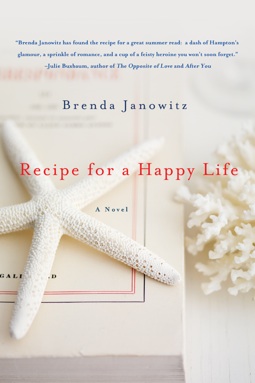
Interview with Brenda Janowitz- author of Recipe For A Happy Life

recipe for happy lifeBrenda Janowitz, author of Recipe for a Happy Life, stopped by to answer questions about the writing process, who would be perfect for a movie version of Recipe for a Happy Life, and much more. Read on for Brenda’s fun and interesting interview!

Interview with Brenda Janowitz


Brenda, thank you so much for agreeing to an interview. Recipe for a Happy Life sounds like a fun read!

-Thanks so much!  I’m so delighted to be here!!


What was the inspiration for Recipe for a Happy Life?

-One summer, when I was single, my Grandma Dorothy informed me that she would be renting a house in the Hamptons.  No more of these silly share houses I was doing with my friends each summer.  They were getting me nowhere (read: still single and over thirty).  Instead, I was to stay with her and she would help me meet someone.  The only problem with this scenario was that I was sure she’d meet a man before I did.  She had sparkling crystal blue eyes and a killer figure.  My own hazel eyes and good birthing hips were no match for her easy glamour and style.

When she found out that a Hamptons summer rental costs more than the gross national product of some countries, the idea sort of fell apart.  But it gave me an idea—what if a young woman spent the summer out in the glamorous Hamptons with her even more glamorous grandmother?


Are any of the characters based on people you know in real life or created from your imagination?

-See above: my grandma Dorothy!  But becoming a mother also inspired me, as did my own mom, who is my best friend.

Both of my own grandmothers really inspired me to come up with the character of Vivienne, the glamorous widow six times over.  Neither was a widow six times over, but both of my grandmothers were very glamorous ladies.  When I think of my childhood memories, I’m not likely to picture them in aprons baking cookies.  I picture them in evening gowns.


This (Recipe for a Happy Life) is your 3rd book. Does the writing process get easier with each book?

-I don’t think that it does.  Every time I finish a book, I feel like everything I know about the world—everything I ever knew—is wrapped up in those pages.  It feels like I don’t have anything more to say.  I’m amazed each time I come up with something new.


If Recipe for a Happy Life was made into a movie- do you have an idea of a dream cast?

-Oooh, this one’s tough, because one of the main characters in the book is a 76 year old grandmother.  There’s not too many 76 year old grandmothers running around Hollywood. 

I think Joan Collins would be perfect to play the part of Hannah’s grandmother, but my editor likes Shirley Maclaine.  (Joan, Shirley, call me!)

For the granddaughter, there are so many talented actresses I love: Natalie Portman, Gwyneth Paltrow, Jennifer Garner, Drew Barrymore.  The list could go on….


Brenda, can you describe Recipe for a Happy Life in 15 words or less?

-Oh God, no.  I definitely cannot.  I can’t even do it in less than 30!!  But here’s as short and sweet as I can get it:

When Hannah finds herself spending the summer with her glamorous grandmother, a widow six times over, at her sprawling beach-front Hamptons estate, she learns that there’s more than one recipe for happiness. 


How long from beginning to end did Recipe for a Happy Life take to write?

-Years and years!!  I began work on this novel back in 2006, before my first novel was even published.  But I don’t think I was ready to write this story just yet. 

I picked it back up after finishing my second novel, which was published in 2008, and then worked on RECIPE for years after that. In the time since I began this novel, I met my husband, got married, bought a house, bought a car, and had two children.  Shortly after getting my book deal, I lost my Grandma Dorothy, who gave me the initial idea for the book. 

So, yeah, I guess you could say it took a long time.


When describing your books, would you use the term “chick lit”?

 –My first two novels would be classified as “chick lit,” which is to say they’re smart, funny novels with heart about a single girl living in the city.  And that’s exactly what I was at the time.  But just as I’ve grown up, my writing has grown up, too.  But that doesn’t mean that I mind the “chick lit” label.

I’d consider this novel commercial women’s fiction, but you can call it anything you like.  I think that any label that helps readers find authors and books that they love is a good thing!


Are there any book signing/book tours in place for Recipe for a Happy Life?

-My publicist is working on it as we speak!  I’m hoping to have a few readings set up soon.


Brenda, what are you working on next? Do you have an idea or are you just gathering ideas?

-I’m about 2/3 of the way done with my fourth novel!  But don’t ask me what it’s about.  I never really know what a book is about until I’ve completed a first draft.  Up until it’s finished, it’s just a bunch of ideas on paper.  It’s the re-draft that really turns it into something.

* Special thanks to Brenda Janowitz for agreeing to this interview.

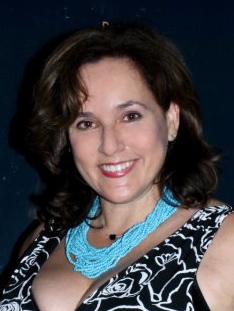
Brenda Janowitz official headshot

Brenda Janowitz, author of Recipe for a Happy Life, is working hard on her fourth novel. If you read and enjoy Recipe for a Happy Life- consider checking out her earlier works- Scot on the Rocks or Jack with a Twist. For more information on Brenda, check out her website, Twitter, and Facebook page.

** Giveaway! A lucky person will win a copy of  Recipe for a Happy Life! To enter, comment with your recipe for a happy life! Please include your email address (you may use the AT and DOT). Contest is open to US only (sorry!) Giveaway runs from Monday, July 8th- till Sunday, July 14th at 11:59pmEST. Winner will be announced July 15th!

Interview with Karen Brown- author of The Longings of Wayward Girls

the longings of wayward girlsKaren Brown, The Longings of Wayward Girls author, agreed to be interviewed about The Longings of Wayward Girls, her writing space, and her thoughts on social media as how it would relate to her main character, Sadie.

Check back on Wednesday, as I’ll feature an Author Spotlight on Karen Brown- and she’ll reveal favorite books, #literarycrush and more!


Interview with Karen Brown:

1. What was the inspiration for The Longings of Wayward Girls?

The novel emerged from a combination of two short stories, “Little Sinners” and “Housewifery,” that appear in my second collection Little Sinners and Other Stories. Both stories are set in the same Connecticut suburb. “Housewifery” explores the world of stay-at-home mothers who discover a hidden pond, while “Little Sinners” focuses on two young friends who play a prank on a neighbor girl. The town in the book is loosely based on the one where I grew up—we used to put on shows, and play Old Fashioned Days House. Our parents hosted an annual Lobster Bake. When you grow up in a place filled with very old houses and barns you always feel a part of the past. I was aware of this while writing the book, and I read a lot of diaries and journals of colonial New England women. I wanted to reveal a world in which certain ideals of marriage and motherhood remain the same, despite the era, but also show how women who transgress ultimately suffer. And yes, I vaguely remember as a child hiding notes under a stone to trick a neighbor girl. Thankfully, without the repercussions in the novel.
2. From the beginning to end, how long did The Longings of Wayward Girls take to write?

I began the novel in May of 2010 with some notes about a group of children in a neighborhood who want to put on their own Aquacade, a swimming show like the one they discover in a 1930s New York World’s Fair playbill in a neighbor’s house. About this time I also wrote a story, “Housewifery,” which appeared in Good Housekeeping in July 2011. I knew I wanted to involve the women from this story in my novel. After a year of drafting I showed it to my agent, who worked with me tirelessly, and after a major revision sold the book last summer. Of course, that wasn’t the end—I revised the book some more, with the help of my brilliant editor, until October 2012.

3. Do you have a writing space? A writing routine?

I like to write in the mornings. This was always after my children were dropped at school, and the house was empty and quiet. I used to sit in one room, in one chair, but I’m lucky that my house is large enough, with multiple rooms with couches and chairs, that I can branch out. I know, though, in which place I’ve written which story, or which scene, so I am a bit superstitious about choosing places. I’ve learned to write with the television as background noise on the weekends—right now, for instance, I think I hear “Pirates of the Caribbean.”

4. Are any of the characters based on people in real life? Or just figments of your imagination?

I never base main characters on real people, but I will use people I meet in random places in supporting roles. So, pregnant Emma with her red hair and lovely tattooed arm is someone who served me breakfast at an Inn in St. Augustine, Florida.

5. Will you be going on a book signing tour? If so, what are you looking forward to the most about the tour?

I have a few places in Connecticut and in Florida lined up for readings so far. I love talking with readers about my work, and I’m most looking forward to revisiting the book again after time away from it.

6. Do you want The Longings of Wayward Girls to be made into a movie one day? If so, who are the actors that would comprise your dream cast?

It would be wonderful to see the book as a movie. I wouldn’t begin to guess who would play what role—I’d rather be surprised. I like the idea of leaving it up to the new creator’s expertise and interpretation.

7. Sadie, the precocious main character in Longings of Wayward Girls, is a character that is hard to forget. How did you create her? Was it hard to write about a character like her?

I think children can be filled with resentment and spite without really knowing why, and Sadie’s cruelty toward Francie seems to arise out of her own sorrow and confusion about growing up. For this reason I was able to sympathize with her and understand her. Because she does some of the things I did as a child (I really wrote a musical called “The Memory of the Fleetfoot Sisters”) I could relate to her creative side. The adult Sadie’s actions were harder to imagine and write about—but I felt that the two Sadies—young and old—are so closely linked. She’s never grown out of the past, and I felt I was essentially continuing her story.

8. Describe Longings of Wayward Girls in 10 words or less?

A suburban mother reawakens old love and a haunted past.

9. The setting for Longings of Wayward Girls is an idyllic, sleepy town. Way before the days of Facebook and Twitter. Can you picture Sadie as a precocious girl using social media?

The “letters under the stone” incident in my own past occurred to me after reading one of the many reports occurring now in which someone corresponds via social media with an unknowing victim. I think it’s all too easy now to pretend to be someone else, and sadly I’m sure Sadie would have taken Facebook and Twitter in stride with similar disastrous results.

*Special thanks to Karen Brown for this interview!


Karen Brown FB

To find out more about Karen Brown or her book, The Longings of Wayward Girls– please visit her website, Facebook, Twitter or Pinterest pages.

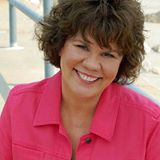
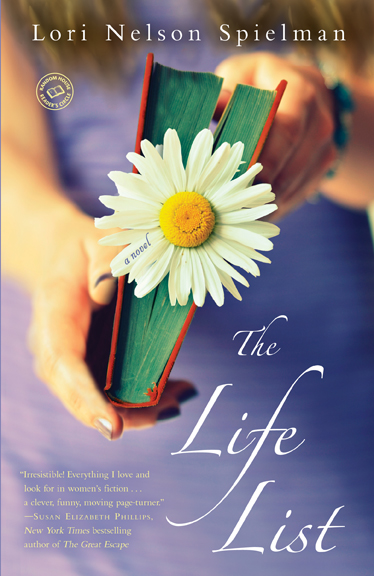
Interview with Lori Nelson Spielman- author of The Life List

IMG_1491_2_4Today, Lori Nelson Spielman, stops by to answer some questions about The Life List (her debut!), writing space, and many other things. Plus: A lucky person will win a copy of The Life List!


Interview with Lori Nelson Spielman

1. What was the inspiration for The Life List?

–First I want to thank you, Tamara, for hosting me today. A few years ago, I came across an old cedar box, and tucked alongside my grandmother’s rosary and my first bankbook was a yellowed piece of notebook paper folded into a neat little square. In my flowery 14-year-old handwriting, I’d written “Lori’s List” across the top, along with 27 life goals. As I read it, I thought about the dreams I once had, some of which had been fulfilled, others that never would be. It struck me how very different my life would be now, had I achieved each goal. Suddenly a story was taking shape…the story of a woman forced to complete her old life list, humble goals she thinks she no longer wants.

2. The main character, Brett, seems to have quite the life- until her mother passes away. How hard was it to write about a mother passing away and the affect it would have on Brett?

— I wrote so many of Elizabeth’s letters with tears rolling down my cheeks. But I didn’t want the book to be a downer, nor did I want it to be complete fluff. So it was tricky balancing lightness with heft. The aftermath of her mother’s death was devastating, yes, but also bittersweet. In the end, it forced Brett to become the person she was meant to be, exactly what Elizabeth had hoped.

3. From the beginning to end, how long did The Life List take to write?

–I started writing in October of 2009 and finished the first draft in January, 2010—record time for me. And that’s when the real work began. I polished and re-wrote for a year, then spent months querying agents. I was offered representation from Jenny Bent in August of 2011. I spent another six months revising, and the book sold in March of 2012. Then time seemed to stop. Nobody outside the business seems to understand why it takes another 16+ months for the book to be published. My mother would say, “It’s finished, so why can’t they just publish it now?”

4. Do you have a writing space? A writing routine?

–I do have an office where I keep my laptop, but I often unplug and take it elsewhere. We have a high counter in one room where I can stand, rather than sit, which as any writer knows, is a nice relief! Because I work full-time, my writing time is generally reserved for late afternoons and evenings. I know the common wisdom is to write every day, and I try to, but I’ve learned not to torture myself if I don’t.

5. Are any of the characters based on people in real life? Or just figments of your imagination?

–That’s an interesting question. I think bits and pieces of my friends and family can be found in almost all of these characters, but there is no character who is completely true to life. I’ve done some volunteer work in a homeless shelter, and I work as a homebound teacher in an inner-city school district, so although these characters were completely fictitious, I was able to draw on real-life experiences when writing these scenes.

6. Will you be going on a book signing tour? If so, what are you looking forward to the most about the tour?

–I’ve got quite a few events lined up, which simultaneously thrills and terrifies me. I’m honored to be invited and cannot wait to connect with readers, but public speaking isn’t my forte, nor do I enjoy being in the spotlight. These events will definitely force me beyond my comfort zone. Maybe I’ll try to channel Brett’s courage when she had to do her stand-up routine!

7. Do you want The Life List to be made into a movie one day? If so, who are the actors that would comprise your dream cast?

–It would be a dream come true to see The Life List on screen. And this dream is an inch closer to reality because Fox 2000 has purchased the film option! I say an inch because it remains a long shot that it’ll ever be produced. Still, it’s exciting to think about the possibility. And my dream cast? I’d love to see Emma Stone, Hilary Swank, or Jennifer Garner as Brett; Mark Ruffalo, Paul Rudd, or Gerard Butler as Brad; and Hugh Jackman or Bradley Cooper as Garrett. (Sadly, Clooney might be just a tad old for a role…darn!)

8. After a person reads the last page of The Life List- what is the most important thing you hope the reader will take from the experience?

–I get the most satisfaction from people who tell me the book inspires them to take a look at their own goals. So many of us feel we have no control over our destiny. Sure we have dreams, but we never really seize them, and before long another year has passed, then a decade. I’d love to think the story might motivate someone to find a new job, dump Mr. Wrong, move to a new place, or anything else they’ve been too timid to do.

9. Are you working on another book? If so, can you tell us what the book is about?

–Between my full-time job and promoting The Life List, I haven’t had the time to fully immerse myself in my new project, but it’s one I’m very excited about. It’s about forgiveness—granting and seeking it. Once again, life forces a woman to make changes, this time to atone for a serious accusation she made years ago, an accusation that as an adult she’s come to doubt.


*Special thanks to Lori Nelson Spielman for agreeing to be interviewed!


lori twitter


Lori Nelson Spielman’s debut novel, The Life List, will be in stores July 2nd! To find out more about Lori, visit her website, Twitter, and Facebook page.


**Giveaway! Traveling With T is giving away a copy of Lori’s book, The Life List, to a lucky person (Thanks Lori!) To enter: Leave a comment telling 1 thing that is on your “life list”!  Please leave a email address in the comments (you may use the AT and DOT). Giveaway begins July 2nd and ends July 9th at 11:59pmEST. Winner will be notified by email July 10th.